Search this site
33 results found with an empty search
- Company Picnic June 2021
Some photos from our family company picnic! Thank you to all who attended!
- Keep Bed Bugs Out of Your Summer Vacation Plans
With the arrival of summer and the restrictions of travel easing, many people are deciding to vacation again. As exciting as that is, it’s a good time for some reminders that bed bugs are excellent hitchhikers and still out there. It’s important to check for bed bugs wherever you may stay during traveling. There’s a misconception that staying in a 5 star resort will lessen your chances of bringing home bed bugs, but the truth is that any lodging facility is susceptible to bed bugs. Bed bugs are nocturnal and feed on blood. Although bed bugs are considered a public health pest by The Environmental Protection Agency (EPA), the Centers for Disease Control and Prevention (CDC), and the United States Department of Agriculture (USDA), they are not known to spread or transmit disease. What They Look Like: Size of an apple seed (5-7 mm or 3/16 - 1/4 inch long) Long and brown, with a flat, oval-shaped body (rounder, more elongated and reddish-brown if recently fed) How to Check Your Room: Put your luggage in the bathroom tub or elevated on a rack away from the bed and wall before checking your room for bed bugs. Pull back the bed sheets and closely inspect the mattresses (if you packed a flashlight, it will come in handy here), pay special attention to the crevices. You can also check surrounding areas such as the bed’s headboard and nearby couches and furniture. You are looking for tiny black dots, blood stains and for actual bed bugs, dead or alive. Check the rest of the room, including behind headboard, inside dressers, and any sofas or chairs. If you do find any evidence of bed bugs, request a room change that is not adjacent to or near your current room. Make sure to inspect the new room as you did the first. Upon returning home, inspect your luggage from outside of your home. For an extra ounce of protection, you can vacuum out your suitcases. Lastly, as an added safety measure, wash your clothing items in hot water and place dryer-safe clothing items in the dryer for 15 minutes or more on the highest setting. If you suspect an infestation, it’s best to contact a licensed professional for assistance.
- Cicadas in 2021
Brood X, which kind of sounds like a band name (and maybe that isn’t too far from the truth if you dive into the song science as explained by UCONN here), is due to make its debut in May-June 2021. You may have heard a lot of buzz already about the noisy batch, which emerge from the ground only once every 17 years. Not every state will witness this event; Wisconsin won’t see the emergence of cicadas until 2024 when Brood XIII will surface. This brood has a reputation for being the largest emergence of cicadas known anywhere. Cicadas are large, flying insects, who are well known for their loud buzzing sound, which is produced by the males in order to attract female mates. After 17 or 13 years sucking on sap of tree roots and developing underground, they will come to the surface for a month to molt, copulate and lay eggs. They are capable of producing between 400-600 eggs each. The adult will then die off and their offspring will burrow into the soil and start the 13-17 year cycle again. Cicadas can cause minimal damage to trees due to feeding during their emergence period, but are otherwise harmless and do not bite. If you want to see the map, more facts, or to see how you can help map the emergence of cicadas (there’s an app for that!) check out Cicada Safari. Sources: University of Connecticut, Pestworld, Cicada Safari
- Ground Bees in Spring
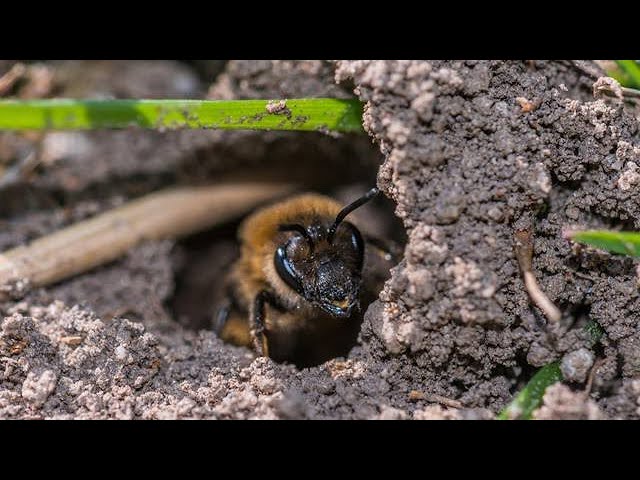
Ground bees can be an active nuisance in yards, they are typically the first stinging insect seen in spring. Ground bees (also known as Mining bees) like to tunnel a few inches deep into dry ground. These solitary bees are typically not aggressive.
- I Have Signs of Voles, What Do I Do?
This time of year, our office starts to receive a lot of calls in regards to vole damage in their yard and planting areas. Vole damage is evident when the snow recedes and the trailing systems appear. These rodents can not only make trails in your lawn, but they can also chew on small or newly planted shrubs and trees. Do I have Moles or Voles? Voles will burrow along the ground and under grass whereas moles will burrow underground beneath the surface. Voles are herbivores and moles are protein eaters (insects, worms or grubs). Appearance and Re-production Voles resemble mice but are typically a little larger with longer fur and shorter tails. Color varies. They can reach sexual maturity quickly and can have several litters per year. What to do if I have activity in my yard? The short answer is usually these areas will recover on their own. If it doesn't appear that damaged areas are coming back in your yard you can overseed or fertilize the area. What if I want to hire a pest control company or take care of elimination on my own? Eradication for voles typically involves covered snap traps along the pathways that they travel. This technique becomes labor intensive and costly for the homeowner due to the attention needed in checking traps everyday by a licensed pest control company and the initial expense in equipment. For further information please check out our Rodents page on our website. Rodents and Small Animals
- Bed Bugs & Essential Oils-Help For Our Essential Nurses
Before Covid-19 the epidemic everybody was talking about bed bugs. For at least 10 years bed bugs were one of the main issues for people’s health concerns. Since Covid-19 there is not been a lot of conversation about bed bugs. Every day we’re seeing new stats about how many people are infected, etc. The reality of it is bed bugs are still here. One of the most challenging places that you will find bed bugs currently is in senior living facilities. These communities are an entirely different animal. The reason for that is elderly people already have a compromised immune system, then you add in the fact that they have to take medications that also compromise their immune system. Weakened immune systems reduce the likelihood of someone reacting to a bed bug bite. So often you won’t realize there is a bed bug problem in these situations, until the population of insects has grown so substantially that they are easily visible, even just by walking into the room. So, today I am reaching out to another essential worker, that is the nurse. Nurses are exposed to bed bugs in these situations of senior living facilities because the population like I previously stated can grow exponentially without being noticed for quite some time. Nurses often have to go in sit down with a resident that they care for, and know on a personal level. Occasionally they have to sit on their bed, help them up, and out of bed. Or even sit in the chair and just be a friend. It’s those types of activities that nurses are doing that puts them at risk of being exposed to taking home bed bugs, or transferring bed bugs from one elderly person’s unit to another one. What I hope to do here is help healthcare workers come up with reasonable solutions to help protect themselves from taking home the insect epidemic. I’m often asked how I never take bedbugs home. The answer to that is simple, I always keep moving and I teach all of our technicians to keep moving. When you stand still and spend a long period of time in one spot the carbon dioxide buildup creates a plume that will alert bed bugs to a blood meal. This will get them moving and clumsily making their way to the area that they are sensing the carbon dioxide. Once there, they focus on karamones (a pheromone that benefits one species, and hinders another), and body heat to find an area suitable for hitchhiking. A crease in a shoe, pant leg, or handbag etc. Obviously when you were in a patient’s room you don’t want to seem nervous or anxious, so you obviously cannot keep moving. What I intend to do is share some information I have researched on essential oils. Which I do not view as choice methods for bed bug elimination, they certainly stand their ground with their repellency abilities. The essential oils that bed bugs do not like are as follows: tea tree, lavender, lemon, peppermint, eucalyptus, clove, lemongrass, citronella, thyme, and neem oil. Tea tree oil has a very good repellency to bed bugs and is safe to be applied to skin. The next essential oil is lavender, which often helps put a mind at ease and helps you to sleep, mixing lavender oil with water and applying around the bed can help put a mind at ease and potentially repel any insects from invading your area of rest. Lemon oil and lemongrass are both highly acidic so it is not wise to use it on your skin, but adding a few drops into water and applying through a spray bottle or into the laundry will leave your bed sheets smelling lemony fresh and help repel insects from your bedding area. Peppermint has fantastic insect and mouse repellent abilities, but when applied to a child to bed can cause problems as they have weaker skin. Also mixing peppermint with lemongrass is known to cause allergic reactions in bed bugs. Eucalyptus, a favorite food of koalas, is also a repellent and oil that reports great killing power for bed bugs. This, however, is not safe for the skin. Clove oil has a very strong odor, and is excellent at repelling and also reports a strong ability to kill insects but with the strong odor, may be better being applied to backpacks, handbags, shoes Etc. Thyme oil is another product that has a strong odor and insecticidal qualities. I’ve recently seen this used in hand wipes, where a family member was using them to wipe down a chair shortly after we applied pesticides to it. The Thyme oil drove all the insects off of the chair into the surrounding living room area. Last but not least, neem oil, which I personally feel has the strongest repellency out of all oils I’ve mentioned previously. It is used to remove skin tags, warts, and other blemishes. It is not safe for long term skin exposure. But I feel its repellency abilities are unmatched. The general rule of thumb that I have noticed with all of these oils are roughly a few drops into 20-30 mL of water, and a spray bottle when applying to bedding, shoes, handbags, and potentially scrubs with oils that are safe to use with dermal exposure. If essential oils aren’t your thing. It’s a good idea then to bring an alternate pair of clothes and shoes. Then before leaving throw the clothes and shoes you were wearing in the dryer for 30 minutes. All dryers on low heat run above 125 degrees Fahrenheit which is enough to kill bed bugs. A trick I have picked up from a customer on shoes, is to tie the shoe laces into a knot. When you shut the dryer door keep the knot outside of the dryer. This way the shoes stay elevated and don’t tumble around for 30 minutes. I hope this helps any health care workers who find themselves in this predicament. Josh Koenig Technical Director Safeway Pest Management *The use of essential oils is at the users own risk.
- Flea Facts 101
If you’ ever had fleas in your home then you’ve probably felt the urge to yell, “Flee, you terrible Flea!” The facts here might just have you feeling itchy by the time you’re done reading this blog, but we’ll have scratched the surface and learned some great facts regarding fleas. The Facts Did you know that there are thousands of species of fleas worldwide? That fact alone probably has your skin crawling. In Wisconsin we (and our furry friends) tend to only have run-ins with a few types of fleas. The cat flea is the most common domestic flea that we meet. Fleas are small, wingless parasites that feed on blood. They appear flat, dark, and reddish-brown in color and the adults are about 1/8 of an inch long (1 to 3mm). Fleas have 3 pairs of legs. They do not have the ability to fly, but they can jump! Fleas can jump as high as 8” vertically, which is 150 times their own height. Once a flea hatches and becomes an adult, it will jump onto a host. Fleas are attracted to and can live on any warm-blooded animal (yes, including humans), but seem to prefer hairy animals such as dogs, cats, raccoons, rabbits, squirrels, rodents and other wildlife. Once attached to its host, the flea will feed. The female flea can consume 15 times her own body weight in blood daily. Fleas will mate and lay eggs upon their chosen host. A female flea can lay 2,000 eggs in her lifetime! Some of these eggs will drop off of the host and land in places such as our yards, bedding and carpeting. The Threats Besides the itchy, painful red bumps that flea bites leave behind, flea bites and infestations can cause allergic reactions in humans and pets and can also transfer tapeworms and cause anemia in pets. When fleas populate a mouse colony, disease can become a very deep concern, the worst disease on record being the bubonic plague. They also transmit the bacterial disease murine typhus to humans through infected rats. Prevention Tips Since fleas can be transported on rodents and other animals, search the perimeter of your home and seal any openings where animals or rodents may be entering your home. Keep your yard clear of garbage and pet droppings; keep your lawn properly landscaped. Keep your home clean and vacuum regularly, wash any bed linens that you think may be carrying fleas or their eggs. Protect your pets by checking their coats for fleas, especially if you see any excessive scratching or licking, bathing your pet (and their bedding, collars and plush toys) regularly, and see your vet for annual check-ups and for advice on flea products and prevention. Fleas have the ability to reproduce quickly, so you may want to contact a licensed professional pest management specialist for assistance.
- Why Do I Have Ants in my Bathroom?
When we think of ants, we think of uninvited picnic guests. So when you find ants in your bathroom (and you know YOU haven’t been eating sandwiches in there), it begs the question: Why do I have ants in my bathroom? You may pride yourself on your ability to keep your bathroom clean and disinfected, but sometimes, although it’s an important step, that step alone won’t completely avoid an ant problem from forming in your bathroom. Josh Koenig, Technical Director from Safeway Pest Management says, "From mid to late summer ants in the bathroom, is a very common problem. Multiple things are happening to cause this very common pest issue. First, depending on the weather, you could either have too much rain, or like this summer not enough rain. The amount of precipitation either causes the tunnels, and galleries of the ant’s home to collapse from too much moisture, or there is a lack of moisture in the soil needed for all insects to survive. When this happens insects go out looking for locations that are humid enough to sustain life. The majority of insects need about 50% humidity or they will die from dehydration. Our bathrooms with shower humidity present, the sweating toilets, and water lines give them the moisture needed, which they are currently lacking outside. Now that they found the moisture they realize they have shelter. The last thing they need is a food source. The drains of showers and sinks often hold sweets, fats, other oils, etc washed off our bodies that they can feed on. Not to mention other insects they can prey on which are also looking for moisture. Last but not least, the seal under the toilet is actually made from beeswax, which often becomes a favorite snack of many ant species seeking shelter in your restroom." Types of Ants Found in the Bathroom There are several ant species found in Wisconsin, and a few stand out as the most common found in bathrooms due to the availability of moisture and potential food sources. These are: Carpenter ants, Pharaoh ants and Odorous house ants. A Few Could Mean Many More If you see just a few ants scurrying around your bathroom, chances are that there are many more nearby. The main colony nest may be located inside or outside your home, making the bathroom a secondary nest location. There are some preventative measures you can take, but if the issue calls for it, you may need to contact a pest professional for help. You can call our office at 262-679-4422, we are happy to help! Preventative Measures to Reduce the Chance of an Ant Infestation Keep tree branches and shrubs trimmed away from your home. Replace any water-damaged wood within your home. Caulk and seal cracks and crevices, repair screens on doors and windows. Keep floors swept and counters clean and dry. Take the trash out daily. Replace or repair any plumbing problems that may result in pooling water, such as leaking sink, shower, or bathtub faucets.
- Cicada Killer Wasp vs Asian Giant Hornet-What's the Difference?
Larger stinging insects such as the Cicada killer wasp may be easily mistaken as the media-hyped Asian Giant "murder" hornet, but as you'll read below, there is quite a difference between the two. The Cicada Killer Wasp The cicada killer is not nearly aggressive as the Asian giant hornet, to honeybees or to humans and pets alike. They are a solitary wasp that look like an over-sized, paler version of a yellow jacket. Where does that scary-sounding name come from? Well, the name is actually quite fitting, as female cicada killer wasps locate cicadas and paralyze them by stinging them and then place the paralyzed cicadas in each burrow and then deposit an egg in each burrow. Cicada killer wasp females create burrows usually where full sunlight is present. A common place for a burrow is bare soil, such as close to sidewalks, in flower beds or beneath shrubs. Cicada killer wasps are up to 1 1/2 inch in length. Males are usually smaller compared to females. They are dark brown to black in color, with colorful yellow markings on several segments of their abdomen. Their wings are reddish-orange. Only female cicada killers sting. The Asian Giant Hornet Regardless of the social media hype and shady web articles, experts consistently state that the Asian giant hornet is not particularly hostile toward humans and pets, but is a significant predator of honeybees. Asian giant hornets are social insects and maintain underground colonies with one queen and multiple workers. They are the world’s largest hornet, measuring 1.5 – 2 inches in length. They carry around a large orange or yellow head and prominent eyes. They have a black and yellow striped abdomen. The Asian giant hornet's nest is hard to locate. They are often formed in pre-existing holes in the ground (such as a rodent's nest) or in hollowed tree trunks or dead tree roots. As social insects, they have the ability to carry out coordinated attacks against the nests of other stinging insects. In other words, they will massacre and occupy the nests of paper wasps, yellow jackets, and as well-stated in the media, honeybees. The hornet was first detected in North America in December 2019 when a Washington resident found a large, dead hornet. The hornet was confirmed to be an Asian giant hornet. Thankfully, the United States Department of Agriculture, the Washington State Department of Agriculture and local universities have begun work to educate, locate and report, and eradicate the pest before it becomes established. If you find nests around your home, contact a licensed pest professional to deal with any active nests in a safe manner.